HR field guide to the future: Contending with corporate backlash
HR and business leaders who leverage people’s behavioral preferences – and offer options appealing to those preferences – will help their organization’s health.

HR and business leaders who leverage people’s behavioral preferences – and offer options appealing to those preferences – will help their organization’s health.

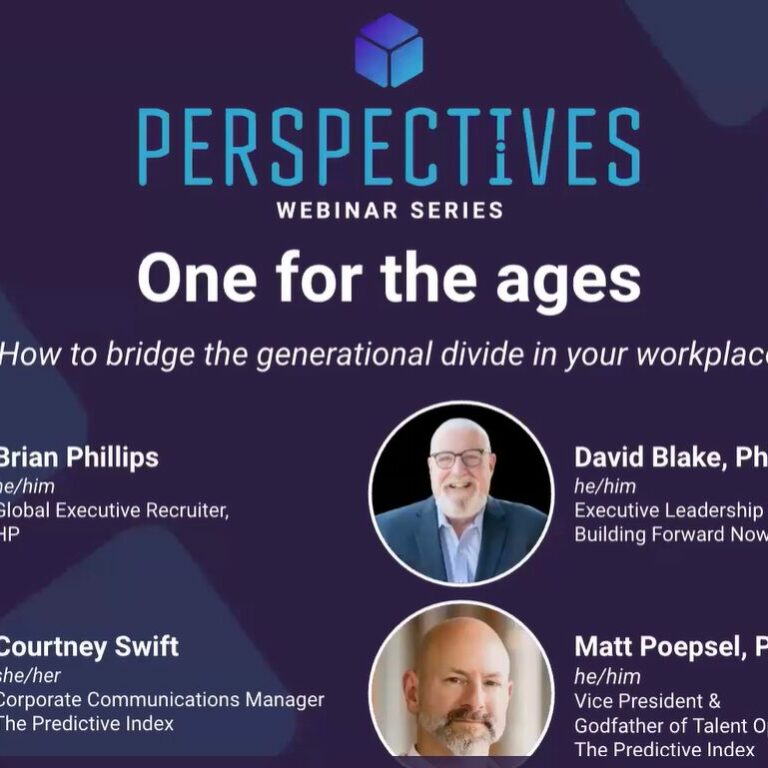
For the first time in modern history, as many as five different generations of employees are working together at the same time. How should HR and business leaders prepare for the evolving workplace dynamics?

HR practitioners can offer guidance and reassurance. Help people understand that generative AI tools work best when paired with people who possess strong social and emotional skills.

We’re recapping highlights from PI’s year, and as a show of gratitude, we’ve compiled some neatly wrapped playlists, arranged by Reference Profile.

Learn how to create a leadership development plan by assessing organizational needs, creating the plan, and measuring results and impact.

Discover how to use personality tests in the workplace, including best practices and a step-by-step guide on how to conduct them in your organization.

As an HR leader, it’s imperative you understand the factors driving a talent shortage, its potential long-term effects, and your level of vulnerability as a company.

Communication training for managers builds employee relationships and supports business goals. Give managers tools to become great leaders with PI for managers.

You need to make time to train and develop leaders at every level. Strengthen your bench, by equipping managers with the sort of data that helps them better understand their people’s behaviors.

Learn how to create an HR strategy by focusing on business goals, conducting a gap analysis, measuring against KPIs, executing the strategy, and reassessing it.

Think about the last meeting that made you want to quit your job and stroll into the wilderness. Maybe it was with a new employee, or that team member you rarely interact with- or one you interact with too much.

Removing equity from the DEI equation threatens to undermine the very foundation of inclusive workplaces. At PI, we recognize that true inclusion is unattainable without equity.

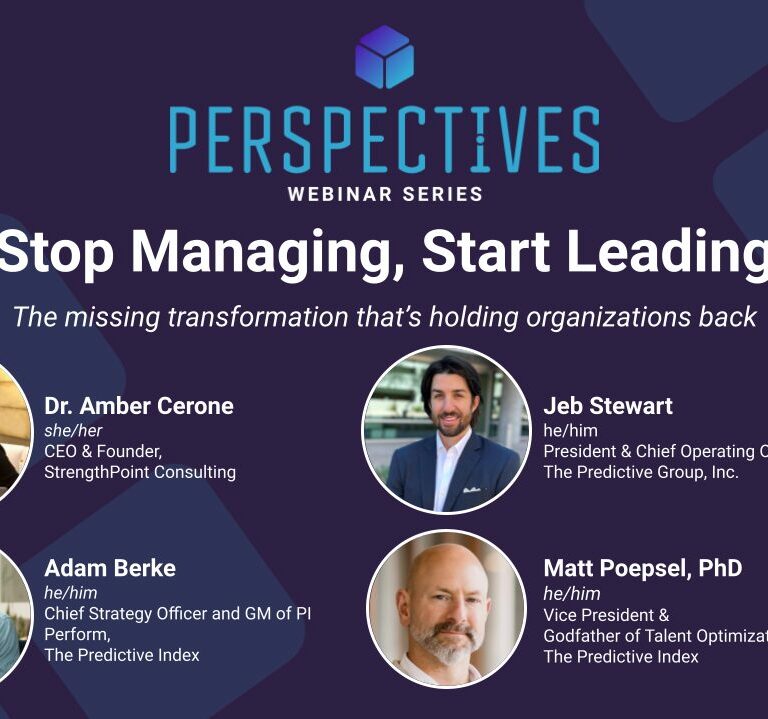
Leadership styles have also evolved over time. Today, there are dozens of leadership approaches to choose from. Sometimes, we fall into the habit of overusing a particular style because it’s comfortable, or it was effective in other, unrelated situations.

we’ve seen a sudden shift from in-person to remote work, then to more complex hybrid arrangements. Meanwhile, a robust job market has meant increased employee expectations all around. And, of course, there are the still evolving challenges coming from new technology like AI.