The Predictive Index Reference Profile
Persuader
The Persuader is an engaging communicator who operates with a strong sense of urgency and initiative. They drive to get things done both with and through people, at ease in group settings and self-assured when meeting new people.

What is a Persuader
The Persuader is a confident, venturesome doer, capable of making decisions but also delegating authority when appropriate. A self-starter, they tend to be less concerned with details than results, but can also be skilled at training and developing others.

Motivating


Enthusiastic


Gregarious

Ambitious
Managing Persuaders
Persuaders need opportunities to get involved in new projects and interact with different people frequently. They excel when afforded some independence and flexibility, while learning and advancing at a faster-than-average pace.
Learn how to manage Persuaders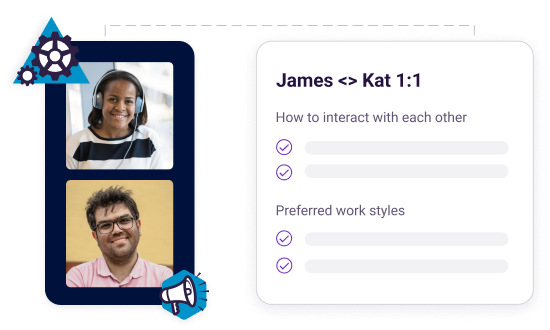
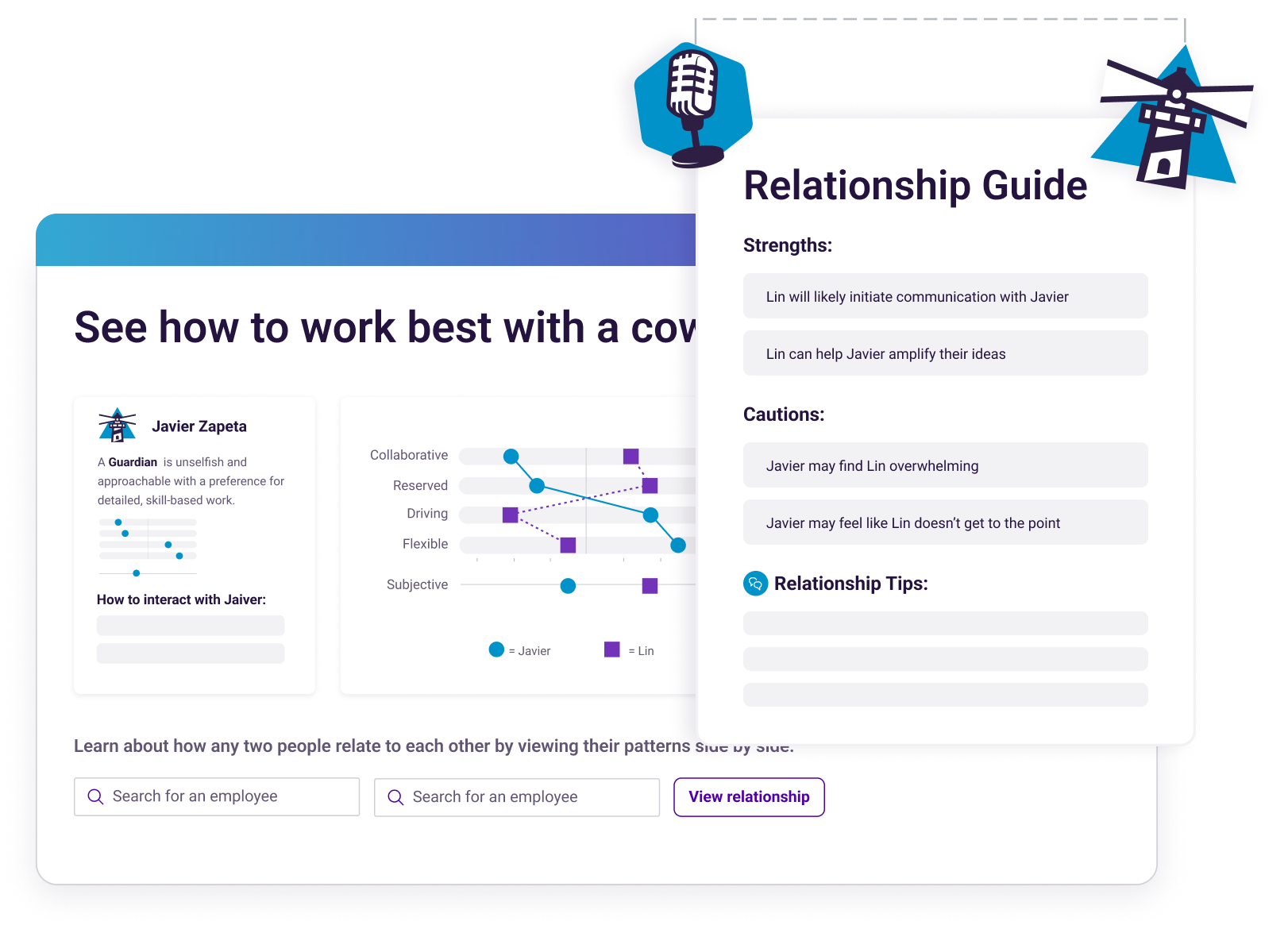
Maximize Persuader potential
Optimize Persuader impact through variety, both in their projects and the people they work with. They can be influential team members when they are free from repetitive routines and can change pace relatively easily, and without too much concern for process details.
Learn how to maximize Persuader potentialGet deeper insights into your team with the PI Behavioral Assessment
Onboard, coach, and develop Persuaders
Empower your Persuader from day one. Use behavioral insights from PI Perform, PI Hire, and PI Inspire, to create professional growth plans and offer actionable feedback according to their unique behavioral pattern.
Candidate Behavioral Report
Activate insights related to workplace behaviors, strengths, and caution areas.
Coaching tools for managers
Empower continuous feedback, 360 feedback, and employee recognition.
Goals
Management
Enhance visibility into company initiatives and personal development goals.
Management Strategy Guide
Customize guidance and feedback to your employees' unique behavioral needs.
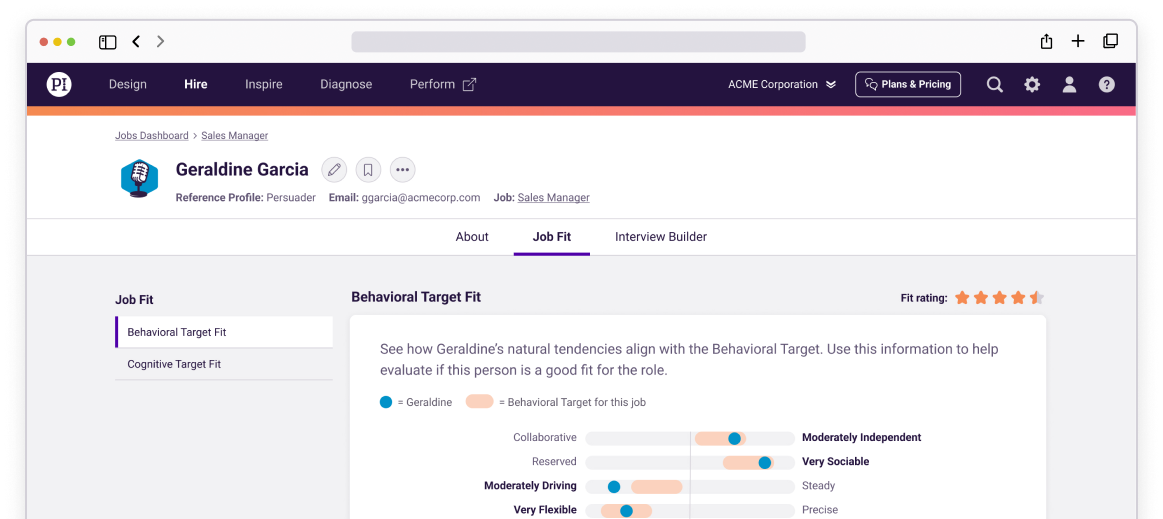
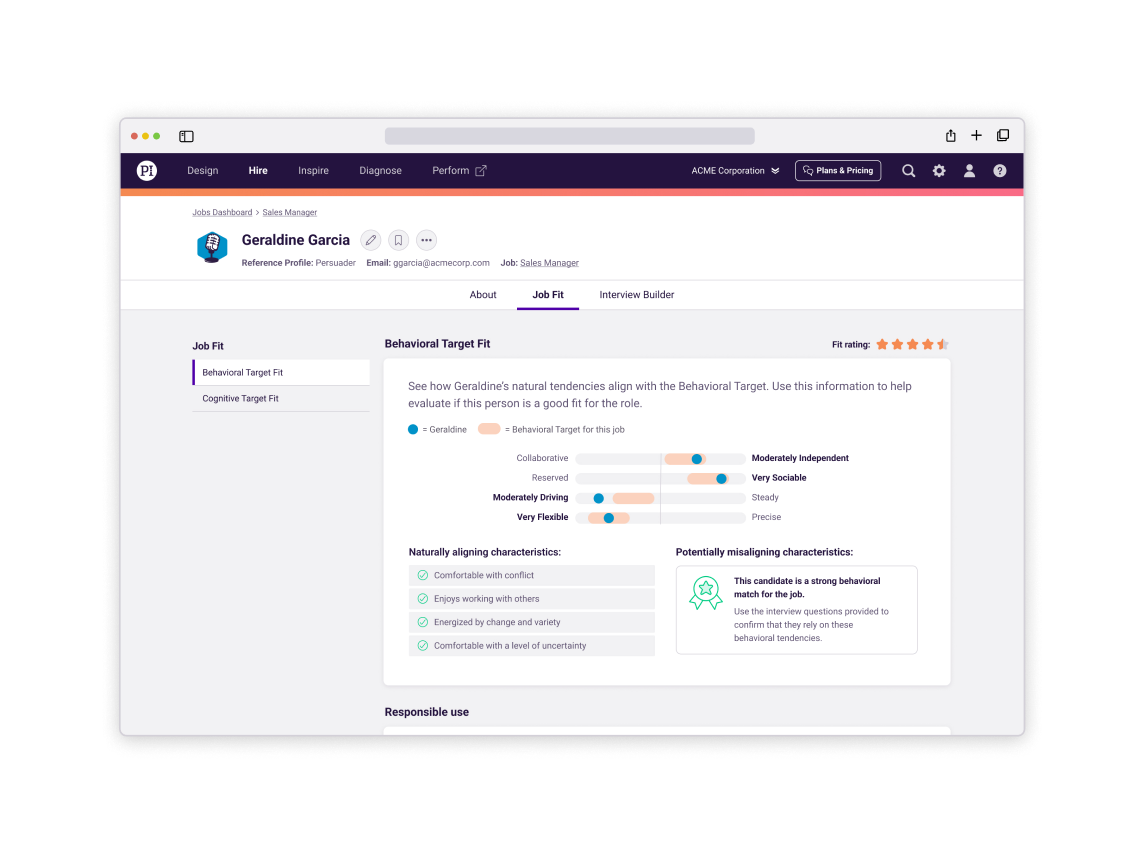
Activate insights related to workplace behaviors, strengths, and caution areas.
Learn moreExperience the power of PI firsthand.
Schedule a demo to see how the PI platform can transform your team dynamics and drive performance.
Learn more about the Persuader Reference Profile
Persuaders are essential to keeping your team running smoothly. By maximizing their potential, you can elevate your team’s productivity. Understanding their unique strengths and areas for growth is the first step in tailoring your management approach.
Frequently asked questions
The Persuader is one of the 17 Predictive Index (PI) Reference Profiles. Persuaders are engaging, socially confident individuals who operate with a strong sense of urgency and initiative. They are skilled at influencing others and driving results both independently and through people. This profile reflects someone who thrives on connection, persuasion, and rallying others around their ideas.
Persuaders are known for their charisma, communication skills, and ability to influence others. They are confident, persuasive, and effective at building relationships and motivating teams. Their initiative and results-oriented mindset make them especially strong in roles that require driving action through people.
To manage a Persuader effectively, provide opportunities for interaction, influence, and leadership. They perform best when given autonomy and clear goals, along with the freedom to engage others and drive results. Managers should recognize their contributions, provide visibility, and align their efforts with business priorities.
On a team, Persuaders bring energy, influence, and strong communication. They help motivate others, build alignment, and push initiatives forward. However, their focus on big-picture outcomes and delegation may require balancing with more detail-oriented profiles to ensure execution is consistent and thorough.
Reference Profiles are broad, descriptive categories based on results from the PI Behavioral Assessment.
- Every person who takes the assessment is assigned to one of 17 Reference Profiles.
- These profiles provide a general snapshot of workplace behavior without needing to interpret individual factor scores.
Reference Profiles are built from the four primary behavioral drives:
- Dominance (A)
- Extraversion (B)
- Patience (C )
- Formality (D)
A person’s factor scores act like coordinates. Those coordinates are compared to standardized, prototypical profile patterns. The individual is assigned to the Reference Profile that is closest to their pattern.
The Predictive Index is grounded in behavioral science and validated assessment methodology. It measures core behavioral drives (Dominance, Extraversion, Patience, and Formality) that help predict workplace behavior and performance.
Reference Profiles themselves are not meant to be exact representations of a person, but rather a reliable generalization of behavioral patterns. They are created by comparing an individual’s behavioral data to standardized profile patterns using statistical methods.
Importantly:
- Reference Profiles provide a “general neighborhood,” not an exact house
- Individual patterns may vary within the same profile
- The most accurate insights come from combining the full behavioral pattern + profile
This means PI’s behavioral science is accurate in identifying behavioral tendencies and workplace patterns, especially when used as part of a broader, data-informed decision-making process.
Reference Profile data is used as a starting point for understanding workplace behavior, and helping teams make better people decisions across hiring, management, and team design.
You can use it to:
- Quickly understand behavioral tendencies
Reference Profiles provide a shortcut to understanding how someone prefers to work, communicate, and make decisions. - Improve hiring decisions
Match candidates to roles based on behavioral fit, not just skills or experience. - Personalize management and coaching
Adapt communication style, expectations, and feedback based on how someone works best. - Strengthen team dynamics
Compare profiles across a team to understand differences, improve collaboration, and identify gaps. - Guide development conversations
Use insights to support growth, highlight strengths, and address potential caution areas.
Most importantly, Reference Profiles should be used alongside full behavioral data—not in isolation—to make more informed, data-driven people decisions.