The Predictive Index Reference Profile
Analyzer
The Analyzer is a serious, results-oriented person. Driven and disciplined, they balance a sense of urgency with accuracy and quality. They approach their work with thorough analysis and detailed knowledge of relevant facts.

What is an Analyzer
Analyzers can be assertive and decisive when representing their expertise. They work well within proven processes, and lean heavily on established facts and their own knowledge.

Focused


Tactical


Formal

Precise
Managing Analyzers
Optimize Analyzer performance by encouraging them to express their own ideas, and then put them into action. Provide opportunities for Analyzers to use their expertise, without a lot of critical oversight into their work.
Learn how to manage Analyzers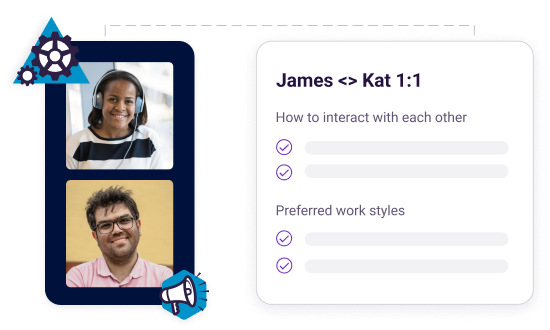
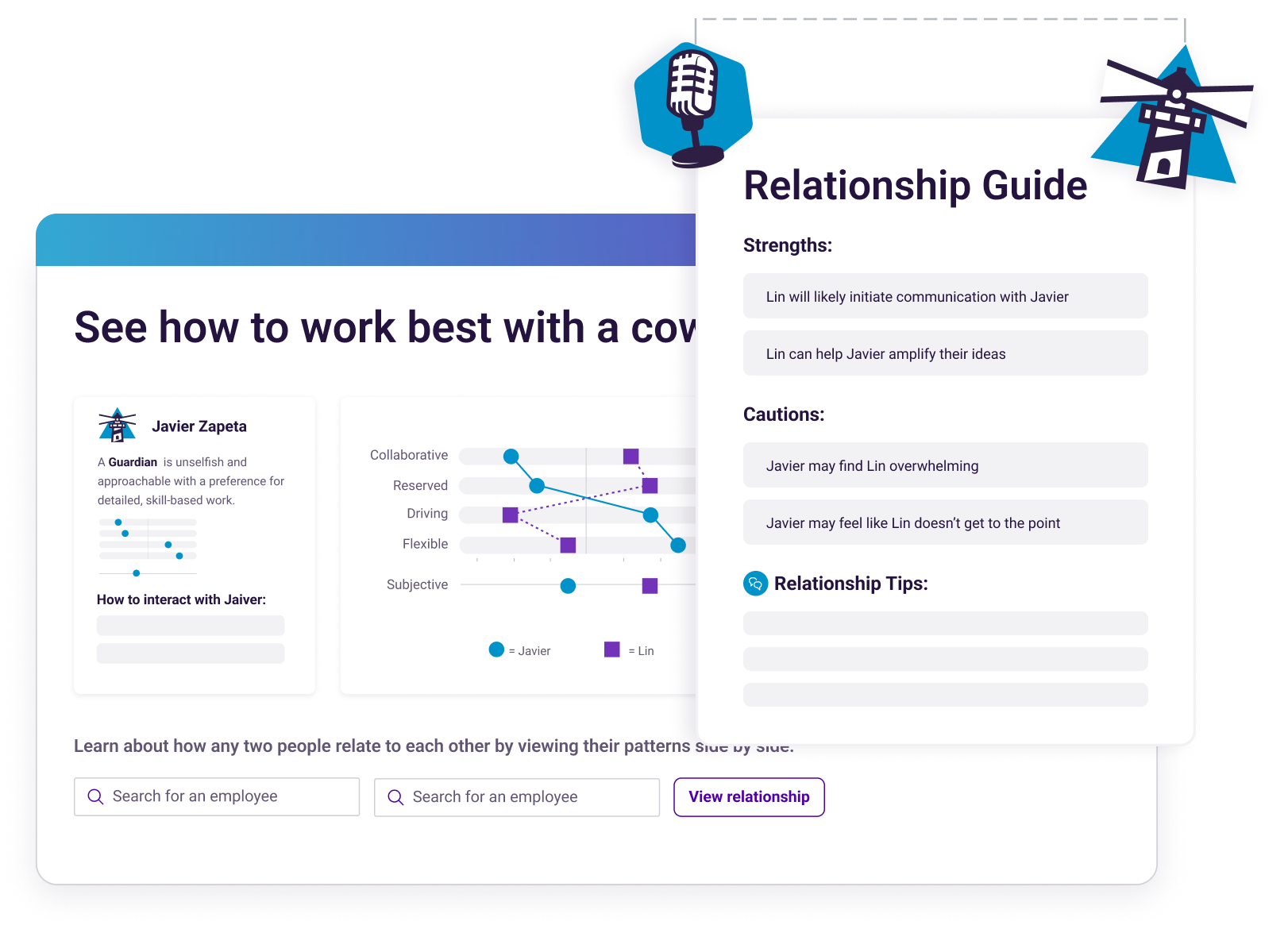
Maximize Analyzer potential
Analyzers are essential to quality-driven performance. The Predictive Index provides personalized behavioral insights that help harness the Analyzer’s strengths, and enhance their efficiency even further.
Learn how to maximize Analyzer potentialGet deeper insights into your team with the PI Behavioral Assessment
Onboard, coach, and develop Analyzers
Empower your Analyzer from day one. Use behavioral insights from PI Perform, PI Hire, and PI Inspire, to create professional growth plans and offer actionable feedback according to their unique behavioral pattern.
Candidate Behavioral Report
Activate insights related to workplace behaviors, strengths, and caution areas.
Coaching tools for managers
Empower continuous feedback, 360 feedback, and employee recognition.
Goals
Management
Enhance visibility into company initiatives and personal development goals.
Management Strategy Guide
Customize guidance and feedback to your employees' unique behavioral needs.
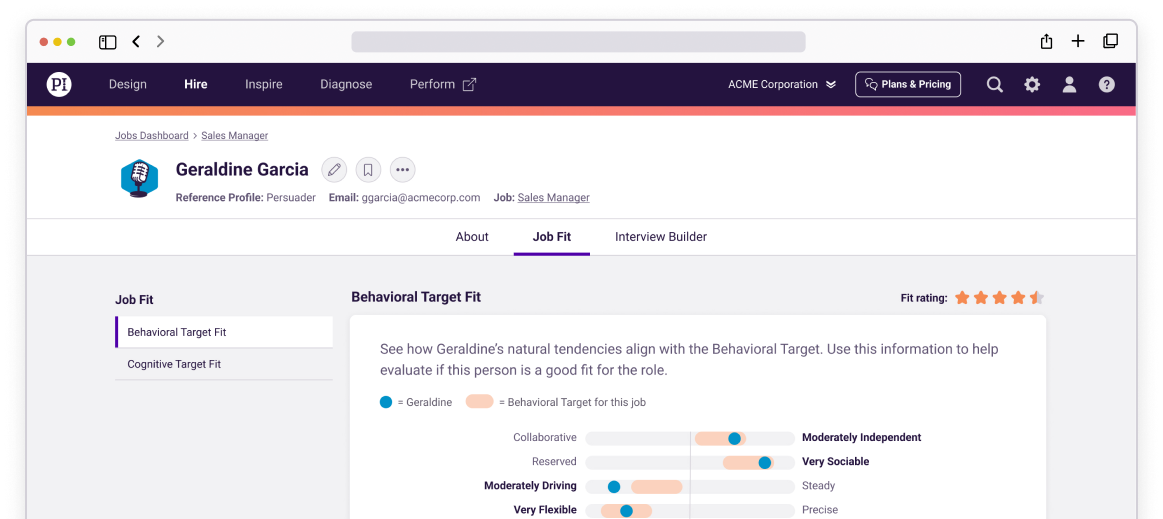
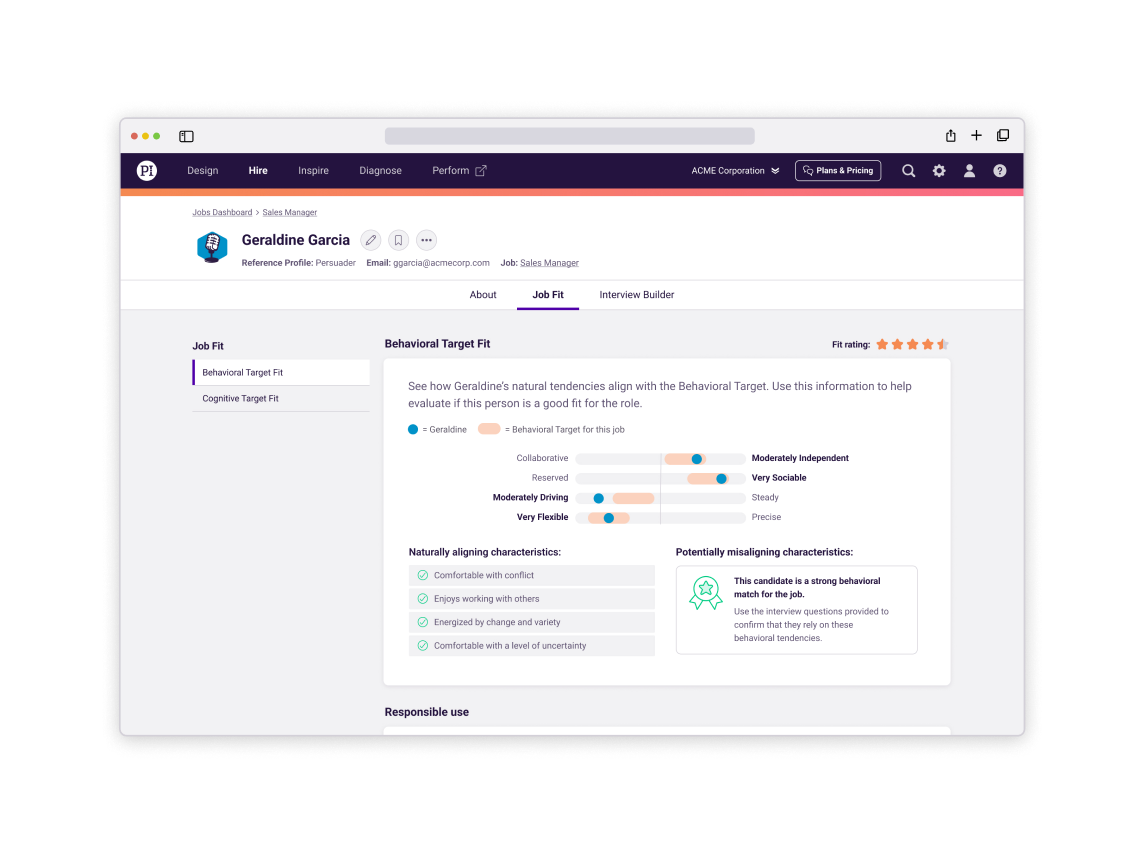
Activate insights related to workplace behaviors, strengths, and caution areas.
Learn moreExperience the power of PI firsthand.
Schedule a demo to see how the PI platform can transform your team dynamics and drive performance.
Learn more about the Analyzer Reference Profile
Analyzers are essential to keeping your team running smoothly. By maximizing their potential, you can elevate your team’s productivity. Understanding their unique strengths and areas for growth is the first step in tailoring your management approach.
Frequently asked questions
The Analyzer is one of the 17 Predictive Index (PI) Reference Profiles. Analyzers are serious, results-oriented individuals who combine a strong sense of urgency with a focus on accuracy and quality. They rely on thorough analysis and detailed knowledge to guide their decisions. This profile reflects someone who values precision, discipline, and making informed, data-driven decisions.
Analyzers are known for their analytical thinking, discipline, and high standards. They are thorough, detail-oriented, and focused on producing accurate, high-quality work. Their ability to evaluate information critically and think through complex problems makes them especially effective in roles that require precision and careful decision-making.
To manage an Analyzer effectively, provide clear expectations, detailed information, and time to evaluate options. They prefer to have all the facts before making decisions and value accuracy over speed. Managers should communicate logically and directly, while supporting their need for thorough analysis and structured problem-solving.
On a team, Analyzers bring critical thinking, precision, and a strong focus on quality. They help teams make well-informed decisions and avoid unnecessary risk through careful evaluation. However, their cautious and detail-oriented approach may slow down fast-moving teams—so balancing them with more action-oriented profiles can improve overall team performance.
Reference Profiles are broad, descriptive categories based on results from the PI Behavioral Assessment.
- Every person who takes the assessment is assigned to one of 17 Reference Profiles.
- These profiles provide a general snapshot of workplace behavior without needing to interpret individual factor scores.
Reference Profiles are built from the four primary behavioral drives:
- Dominance (A)
- Extraversion (B)
- Patience (C )
- Formality (D)
A person’s factor scores act like coordinates. Those coordinates are compared to standardized, prototypical profile patterns. The individual is assigned to the Reference Profile that is closest to their pattern.
The Predictive Index is grounded in behavioral science and validated assessment methodology. It measures core behavioral drives (Dominance, Extraversion, Patience, and Formality) that help predict workplace behavior and performance.
Reference Profiles themselves are not meant to be exact representations of a person, but rather a reliable generalization of behavioral patterns. They are created by comparing an individual’s behavioral data to standardized profile patterns using statistical methods.
Importantly:
- Reference Profiles provide a “general neighborhood,” not an exact house
- Individual patterns may vary within the same profile
- The most accurate insights come from combining the full behavioral pattern + profile
This means PI’s behavioral science is accurate in identifying behavioral tendencies and workplace patterns, especially when used as part of a broader, data-informed decision-making process.
Reference Profile data is used as a starting point for understanding workplace behavior, and helping teams make better people decisions across hiring, management, and team design.
You can use it to:
- Quickly understand behavioral tendencies
Reference Profiles provide a shortcut to understanding how someone prefers to work, communicate, and make decisions. - Improve hiring decisions
Match candidates to roles based on behavioral fit, not just skills or experience. - Personalize management and coaching
Adapt communication style, expectations, and feedback based on how someone works best. - Strengthen team dynamics
Compare profiles across a team to understand differences, improve collaboration, and identify gaps. - Guide development conversations
Use insights to support growth, highlight strengths, and address potential caution areas.
Most importantly, Reference Profiles should be used alongside full behavioral data—not in isolation—to make more informed, data-driven people decisions.