Top Predictor of Job Fit
PI Behavioral Assessment
Behavioral insights empowering HR leaders to turn talent strategy into results—drive performance, retention, and organizational alignment.

TRUSTED BY 10,000+ COMPANIES TO DELIVER OUTSTANDING RESULTS



What is The Predictive Index Behavioral Assessment?
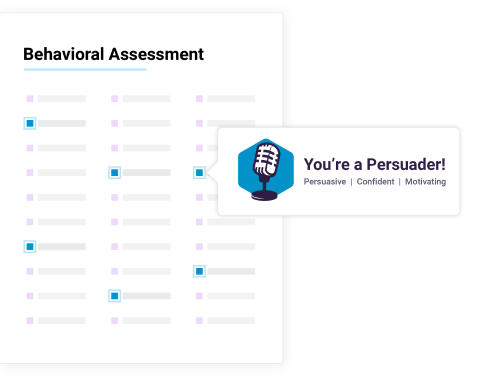
The PI Behavioral Assessment™ is a scientifically validated, behavioral driven assessment. Backed by over 70 years of science, it only takes candidates 6 minutes to complete. Designed for employment decisions with the candidate experience in mind.
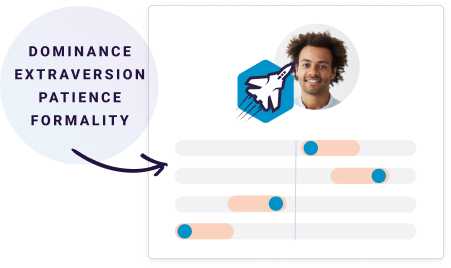
What the Behavioral Assessment Measures
Backed by science.
70
Years of science
37.5M+
Assessments administered
383
Validity studies completed
How does the assessment work?
In just 6 minutes, The Predictive Index Behavioral Assessment provides validated, job-relevant insights into how someone is likely to behave at work and fit a role— offering more predictive value than a traditional interview alone.
What HR leaders are saying about the PI Behavioral Assessment

#1 Talent Assessment Software on G2



Improve the hiring process.
PI helps you define the behavioral requirements of the role, compare candidates against those requirements, and identify people who are most likely to succeed—before they’re hired. The result is more confident decisions, better role fit, and fewer costly mis-hires.
Try PI Hire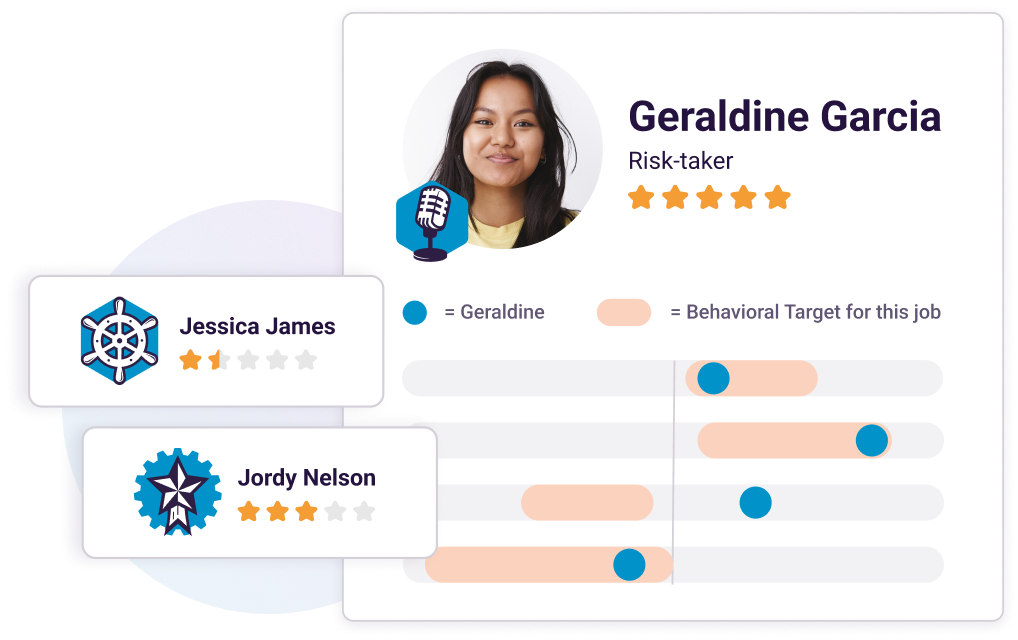
Empower managers and create leaders.
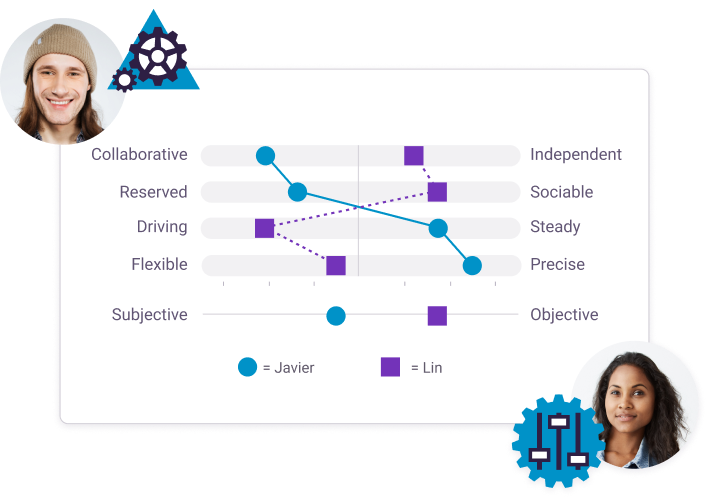
The Behavioral Assessment makes it easier to understand where team members naturally complement one another and where friction may arise, helping managers coach more effectively and build stronger, more aligned teams.
Explore PI InspireMap out the perfect team for the job.
Work doesn’t happen in isolation. PI helps HR leaders look beyond individual roles to understand how teams function together.
By mapping behavioral strengths and needs across a team, you can identify gaps, reduce unnecessary conflict, and design teams that are better aligned to the work they need to do today—and the challenges ahead
Try PI Design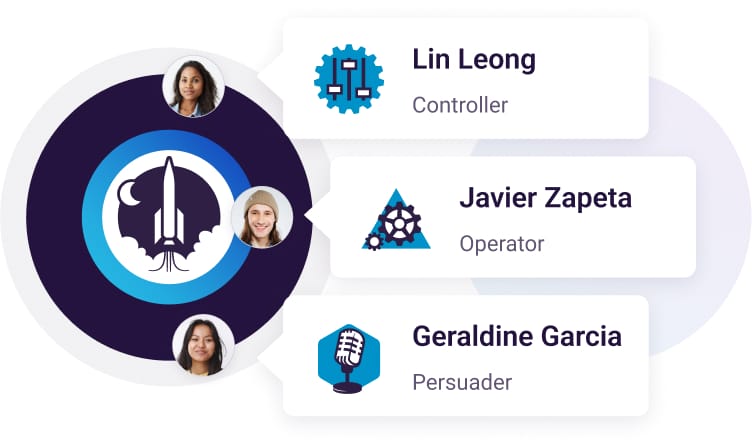
See how the PI Behavioral Assessment reduced turnover by 20%
With PI’s behavioral and engagement tools, O’Reilly Hospitality Management transformed its talent strategy—from better hiring decisions to sharper team awareness and data-backed action plans. The result: dramatic turnover reductions, a stronger culture, and a growing workforce that feels supported, aligned, and set up to succeed.

Frequently asked questions
The PI Behavioral Assessment is an untimed, free-choice, stimulus-response tool that measures an employee’s natural behavioral drives and needs. It’s also far more than a personality test.
PI is your superpower: It lets you understand complex human behavior in six minutes or less—simply by answering two questions. Use the results to predict how individuals will behave in given situations, so you can make great hires, build winning teams, and more.
Those who take the PI Behavioral Assessment are presented with two questions, each pertaining to a single shared list of adjectives.
The first question asks assessment takers to select adjectives that describe the way in which they’re expected to behave at work. The second question, by contrast, asks them to select the adjectives they’d actually use to describe themselves.
Each adjective is associated with one of the four key factors that determine workplace behavior: dominance, extraversion, patience, and formality.
Once the survey is completed, assessment takers are assigned one of 17 Reference Profiles—a snapshot of the way they naturally think and work.
The PI Behavioral Assessment measures four key behavioral drives:
Dominance is the drive to exert influence on people or events.
Extraversion is the drive for social interaction with other people.
Patience is the drive to have consistency and stability.
Formality is the drive to conform to rules and structure.
These four drives, or “factors,” provide a powerful framework for understanding employee behavior within the workplace.
A behavioral assessment, true to its name, is a tool that measures a person’s natural behavioral tendencies.
Behavioral assessments originated during World War I as a means of measuring neurological stress in soldiers. Today, these assessments are used far more broadly to understand what makes people tick.
Within the workplace, a behavioral assessment is a powerful way to improve any organization’s odds of success. It’s proven to help hiring managers predict on-the-job success (especially when paired with an understanding of cognitive ability).
Beyond hiring, behavioral assessments can help managers build team cohesion, improve one-on-one communication, and create a culture of self-awareness.
With great data comes great responsibility. It’s incumbent upon hiring managers to select a behavioral assessment that is scientifically validated for hiring. It’s also critical that this assessment is administered fairly, and that it’s considered just one of many data points used to inform a hiring decision.
Otherwise, assessment administrators run the risk of hiring bias, as well as adverse impact.
Unlike other behavioral assessments on the market, the PI Behavioral Assessment has been certified by third-party reviewers as a valid, fair, and reliable tool to use when hiring.