

The daily stand up meeting has taken on new significance in the socially distanced workplace. On some days, it’s the only human interaction remote team members get.
More extraverted employees may find themselves chomping at the bit when these discussions start. They’re eager to share what they have going on, but that eagerness needs to be tempered so that the scrum meeting (or whatever your org may call it) is relevant to the whole scrum team.
Key Takeaways
- A stand-up meeting is a brief daily team check-in where members share progress, plans, and blockers in 5-15 minutes.
- Ask three questions: What did you accomplish? What will you work on today? What blockers do you have?
- Keep standups consistent, timely, and focused on a visual board to maintain team alignment and surface issues fast.
- Remote teams can use synchronous video calls, asynchronous Slack or Notion posts, or a hybrid approach based on time zones.
What is a Stand-Up Meeting?
A stand-up meeting is a brief, daily team check-in where each team member shares what they’ve accomplished, what they’re working on today, and any obstacles blocking their progress. Typically lasting just 5 to 15 minutes, stand-ups are designed to keep your team aligned, surface problems early, and maintain momentum, without becoming another time-draining meeting.
The practice originated in Agile and Scrum methodologies, where it’s called a “daily standup” or “daily scrum.” The name itself reflects the original purpose: participants would literally stand up during the meeting to keep things brief and focused. Traditionally, the idea behind a daily scrum meeting is to be agile. But remote work can complicate the efficiency of these scrum teams. Having an agenda for your daily meeting goes a long way toward keeping things flowing among remote or dispersed teams. To implement one smoothly, you’ll need to:
- Establish a moderator or scrum master.
- Define goals and ground rules.
- Cater to the personalities of your team.
- Try to minimize distractions.
The 3 Core Questions
Every effective stand-up is built on the same foundation: three core questions that each team member answers. These questions are straightforward, but their power lies in their simplicity and consistency.
Question 1: What did I accomplish since our last standup?
Team members share their progress—completed tasks, tickets closed, or deliverables finished. Keep it brief: one or two sentences maximum. The goal is a quick snapshot, not a detailed status report.
Why this matters: This builds momentum and helps the team see dependencies and understand who’s working on what.
Question 2: What will I work on today?
Team members state their immediate priorities for the next 24 hours. This helps the team anticipate what’s coming and catch misalignment early. If two people are about to work on conflicting tasks, you’ll know it immediately.
Question 3: Are there any blockers preventing me from making progress?
This is where problems surface—waiting for feedback, missing resources, unclear requirements, or dependencies on other teams. Name the blocker, but don’t solve it during the standup (that’s what the “parking lot” is for).
Why this matters: Blockers are the real reason stand-ups exist. By surfacing them daily, you can address problems quickly instead of discovering a week-long delay at your next status meeting. This is where the practice generates real business value.

1. Establish a moderator or scrum master.
The concept of a daily stand-up originated in Silicon Valley, essentially to get people together and promote cohesion. Quite literally, the idea was: Stand up and tell us what you’re working on. The exercise helped eliminate blockers, clear any backlogs, and avoid redundancies before team members parted to work autonomously for much of the rest of the day.
Many companies apply it in a similar form today. But where ‘90s tech companies may have allowed for a more egalitarian approach, remote teams navigating socially distanced work (many for the first time) are wise to appoint someone to run the show.
The role of remote scrum master is less hands-on than it sounds. In fact, the person “leading” a scrum can change day to day, so long as the role itself is clear. And for remote teams, it’s less about running the meeting than merely keeping it on track. In an efficient standup, the moderator should be responsible for:
- Setting up the meeting (and sharing any links or materials in advance)
- Communicating any adjustments to the typical agenda
- Establishing the order of participation
- Ensuring the meeting ends on time
Team size will dictate how much time each member has to speak, and whether there’s room for a broader discussion. But as a general rule, the scrum master should be monitoring the standup for brevity. If an update takes more than the allotted two to three minutes to get through, it’s probably best suited for a separate discussion or meeting.

2. Define goals and ground rules.
It’s important to note there are no uniform ground rules for stand up meetings or their agendas. Your company’s mission, culture and already defined goals ought to dictate the guidelines. If you haven’t clearly established those, or if they’ve recently changed amid shifting economic circumstances, start there.
The most important thing is that your stand up meetings be clear and consistent in their focus.
“For any meeting, I believe the organization should create a standard set of rules they want everyone to follow,” said Bill Flynn, a PI Certified Partner, business coach, and 25-year start-up veteran.
For Flynn, those daily standup rules include (but aren’t limited to):
- Punctuality: Showing up on time ensures efficiency.
- Preparation: Knowing your priorities promotes better time management.
- Attention: Having a clear mind is a matter of focus and respect.
- Transparency: Being detailed and upfront helps course-correct.
- Confidentiality: Emphasizing the scrum as a safe space promotes trust.
Some organizations might insist people put their phones away (hard to enforce when everyone is remote). Others may implement a “pass” option for days people don’t have updates, or otherwise want to cede their time. Maybe your scrum meeting is more resolution-oriented or dictated by a certain product owner.
The right rules and goals are the ones that make sense for your company. But defining them in advance helps everyone feel confident in their contributions, and it makes the job of the moderator easier by moving the stand up meeting along.
3. Cater to the personalities of your team.
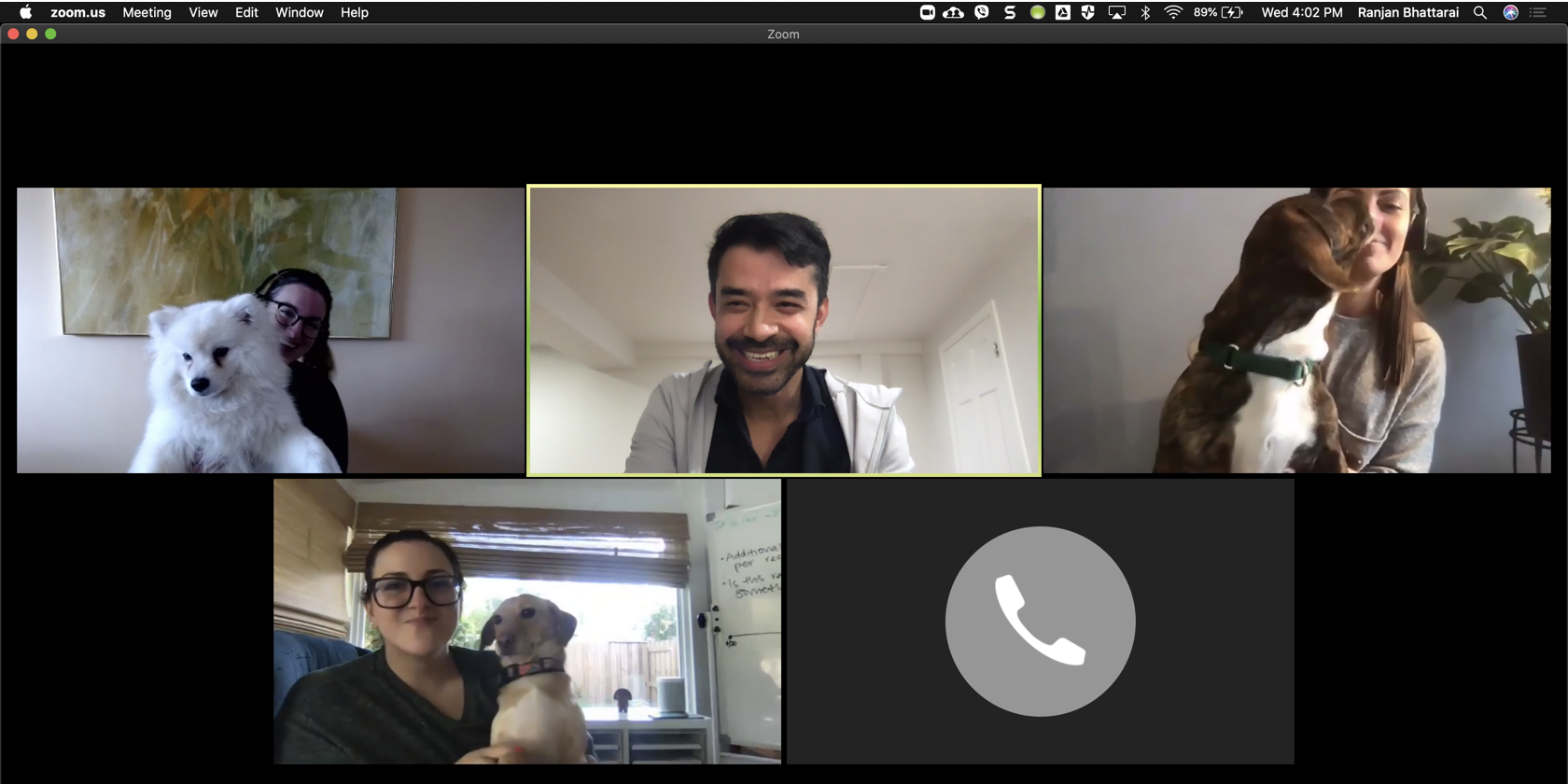
It seems obvious, but one of the keys to a productive standup agenda is consistent and equal participation from all parties. In some ways, that’s actually easier within the constructs of a remote work environment. There’s a level-playing-field feel when we’re all just heads on a Brady Bunch-style video call.
Still, different personalities take to remote work differently. For more dominant personalities accustomed to exerting influence in person, meetings can be tougher to navigate. And where a more introverted personality was accustomed to the dynamics and rhythm of a literal standup, a video conference may feel less natural. Likewise, people with higher formality drives will crave order and structure from virtual meetings.
So it’s incumbent upon the team leader (or scrum master for that particular day) to clearly outline expectations for attendance and participation. Again, these can vary based on your org’s needs and priorities. But as Flynn noted, his often include:
- Mandatory attendance (except in extenuating circumstances)
- A consistent start and end time every day
- Two-minute updates per person
- Only updates pertinent and relevant to the whole team
It’s also important, as with any remote meeting, to establish a consensus as to how everyone will get to speak. Whether it’s round-robin, hand raising, or some other method, be sure to accommodate all these behavioral tendencies. This will ensure everybody is comfortable and equally heard.
Of course, while you want to keep things on track, it’s also important to keep them light. Don’t over-police non-pertinence. If someone wants to rave about the sweet tea they’re enjoying, let them. Especially when forced into remote work due to trying times, a little levity in a stand up meeting can go a long way.
4. Try to minimize distractions.
Easier said than done, right? If you’re attempting to work from home with kids, or your three roommates are crammed into a tight downtown studio, the idea of eliminating distractions is laughable. So the operative word here is “try.”
But if the primary goals of daily stand up meetings for remote teams are communication, cohesion, and efficiency, then decluttering those 30 minutes (or however long is allotted) is important. There are the simple and obvious steps, such as:
- Encouraging people to put down their phones
- Finding a quiet and secluded space for standup
- Limiting extraneous communications (i.e., Slack, Gchat) during standup
And then there are broader steps you can take as a team or organization to ensure everyone is able to devote the appropriate time, energy, and head space to the daily standup agenda.
Maybe that means clearing the hours before and after and labeling them no-meeting blocks. This allows your higher formality team members time to prepare. It also allows those with Persistent profiles an opportunity to reflect on the information discussed without jumping straight to another conference room (real or virtual). And for everyone involved, it guards against the very real onset of Zoom fatigue.
There will be exceptions, of course. Flynn noted “customer emergencies” qualify as one common (and acceptable) reason to pick up the phone and disengage. But in general, if you and your team can commit to a distraction-free status meeting, it will foster trust, respect, and collaboration among one another.
Remote & Asynchronous Stand-Ups
Today’s hybrid and distributed teams need flexibility. Stand-ups can work synchronously, asynchronously, or in a hybrid model, the key is choosing what works for your context.
Synchronous (Real-time, Video)
Use Zoom, Microsoft Teams, or Google Meet. Team members join the call and walk the board together. This builds connection and allows for quick clarifications. Best for: Teams in the same time zone or teams that value real-time dialogue.
Asynchronous (Slack or Notion)
Team members post their three-question updates in a dedicated Slack channel or Notion doc on their own schedule. The team reads through them when online. Best for: Fully distributed teams, teams across multiple time zones, or async-first cultures.
How it works: Create a Slack template or Notion page with the three questions. Each person posts their update. The team reviews them during their work hours.
Hybrid (Async + Weekly Sync)
Daily async updates posted in Slack/Notion, plus a 30-minute video sync once a week to discuss blockers in depth and coordinate across teams. Best for: Mixed time zones or teams that want daily visibility without daily synchronous meetings.
Managing Time Zones
If your team spans time zones, either rotate the live meeting time so it’s not always the same people at 6 AM, or go fully async and let people post updates when it suits their day. The goal is synchronization, not necessarily simultaneous meetings.
Balancing efficiency with empathy
It’s tempting to overformalize meetings among remote teams, especially if that’s the nature of your company. An agenda implies some level of formality. But virtual teams can and will only manage so much formality.
Particularly in times of socially distanced remote work, when this is not so much a choice as a requirement, any emphasis on efficiency needs to be tempered by empathy.
Set ground rules and establish consistency, so as to hold people accountable and cater to the needs of those with higher formality drives. But remember to be human. Be flexible if someone needs to skip a day. If a team member is regularly blowing past their allotted time, talk to them privately, rather than reprimanding them in front of the whole team.
Virtual leadership isn’t easy. But if you keep empathy and understanding as core principles, you’ll be amazed how much buy-in you might get from a trusting team when you do impose a more firm agenda.
Want to learn more about managing different personality types through remote work? Check out this e-book. .