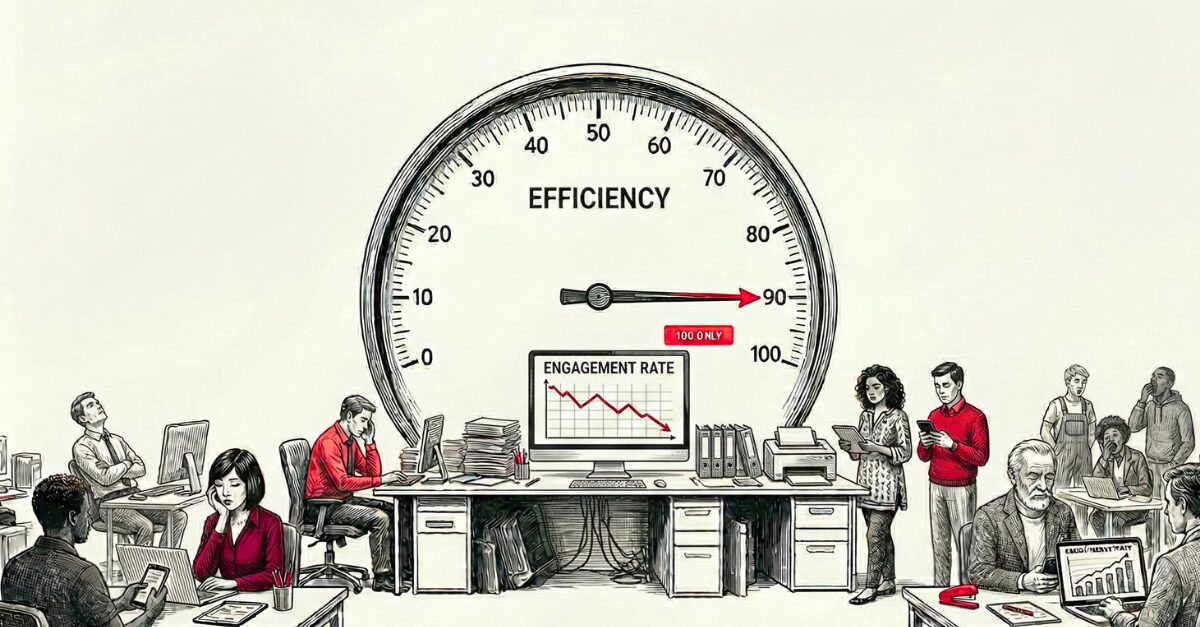
“If we make work faster, engagement will follow.”
At face value, the logic sounds right. AI streamlines work. Automation removes friction. Employees spend less time on tedious tasks and more time on meaningful work. Productivity rises, cognitive overload fades, and mental exhaustion finally lets up.
Except that’s not what most organizations are seeing.
Gallup reports employee engagement reached its lowest in over a decade last year, with only 31% of employees feeling engaged. Motivation has dropped. Boredom in the workplace has increased.
So what explains the gap?
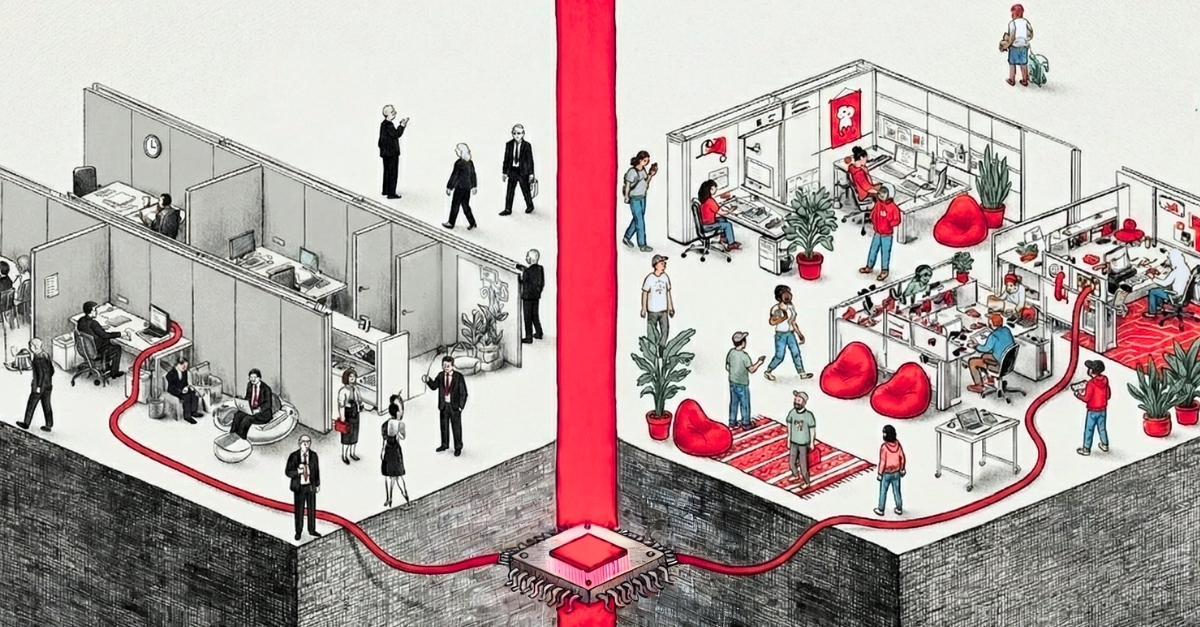
It’s not that employees are unclear about what they need; it’s that leaders keep solving for the wrong problem. They’re chasing productivity gains while employees are losing autonomy, purpose and connection. No amount of streamlined processes will fix engagement if the work itself feels hollow.
Many of today’s workplace challenges aren’t coming from bad intentions. They’re coming from well-intentioned decisions made without understanding how they actually land with employees.
When “helping” is actually hurting
There’s a reason engagement isn’t a “nice-to-have.” Businesses with higher employee engagement see 14% higher productivity and 23% higher profitability.
But when leaders treat engagement as secondary to efficiency, they undercut the very outcomes they’re trying to improve.
Here’s what can happen when the workplace becomes relentlessly optimized:
- Autonomy shrinks. Tools that “standardize” work can also narrow decision-making. Employees start feeling managed by workflow instead of trusted for judgment.
- Work gets transactional. When speed becomes the primary metric, people stop seeing how their work connects to customers, teammates, or a bigger mission.
- Motivation quietly erodes. Research on gen AI collaboration shows a real trade-off: people may perform better in the moment, but intrinsic motivation can drop and boredom can rise by 20% when they move back to tasks without AI support.
- Connection thins out. The cleaner the process, the fewer informal moments there are to build trust. Over time, employee disengagement becomes normalized.
What follows is a kind of “quiet cracking.” Employees show up and do their job, but mentally and emotionally, they’re struggling. One report finds that 54% of employees feel unhappy at work, and nearly half of American workers experience stress every day. The daily sense of mental exhaustion compounds over time.
The tools designed to remove friction, when implemented without intention, actually strip away the parts of work that create meaning, creativity and connection.
What employees actually want from work (and why “more efficient” isn’t enough)
Across generations, employees want more than streamlined processes. They want work that feels sustainable and human.
Research shows that employees today, across all generations, want more than efficiency from their jobs. Here’s what they’re looking for:
- Work-life balance: Gen Z and millennial workers want jobs that give them balance. Perks like a 4-day workweek, flexibility and clear boundaries stand out as ways for them to maintain relationships and responsibilities outside of work.
- Mental health support: With more than 80% of employees at risk of burnout, well-being and mental health remain top priorities for young employees. They want their workplaces to acknowledge and support their emotional needs, not just their material ones.
- Development and learning: Gen Z and millennials are less interested in career progression than Gen X and boomers. They’ll prioritize jobs that offer chances to grow and learn over those that offer a quick promotion.
- Value and meaning: Employees of all ages want to understand how their work matters beyond the day-to-day. They want roles that make them feel connected to something beyond completing a task or hitting a quota.
- Autonomy and trust: Older generations and more experienced workers want their work to trust their expertise and give them autonomy to make decisions, manage their time and grow.
When organizations treat engagement like a productivity problem, they miss what actually drives it. Making work more “efficient” doesn’t address the human elements employees need to thrive: recognition, growth, meaningful relationships and trust.
The real question leaders should ask
Before running to a new productivity tool, leaders need to step back and ask, “Are we solving for what employees actually need, or just what’s easiest to measure?”
Because engagement doesn’t come from optimizing for speed. It comes from employees feeling understood, trusted, and supported in the work itself.
How leaders can improve listening (and build engagement on purpose)
Answering that question requires listening to employees’ feedback and understanding what naturally drives them. Here’s how:
- Assess behavioral fit: Use behavioral assessments to understand how employees are naturally wired, then design roles and team dynamics that match. When employees work in ways that align with their behavioral drives, engagement follows.
- Unearth and diagnose team dynamics: Broader team assessments can surface communication patterns, work styles and potential friction points before they erode engagement. These tools give managers concrete guidance on where to improve collaboration and effectiveness.
- Listen well, then take action: Listen to employees directly by capturing candid feedback. Employee engagement surveys allow managers to get an honest pulse check from employees, track trends and discover signs of burnout before they worsen.
Stop solving for the wrong thing.
Engagement doesn’t come from optimizing for speed. It comes from employees feeling understood, trusted and supported in the work itself.
Stop solving for the wrong thing. The Predictive Index helps you build engagement the right way, by understanding what drives your people, not just what drives productivity. Discover how PI gives leaders the blueprint to design work that keeps the human elements intact.