Most organizations are moving fast with AI adoption- maybe faster than their teams are ready for.
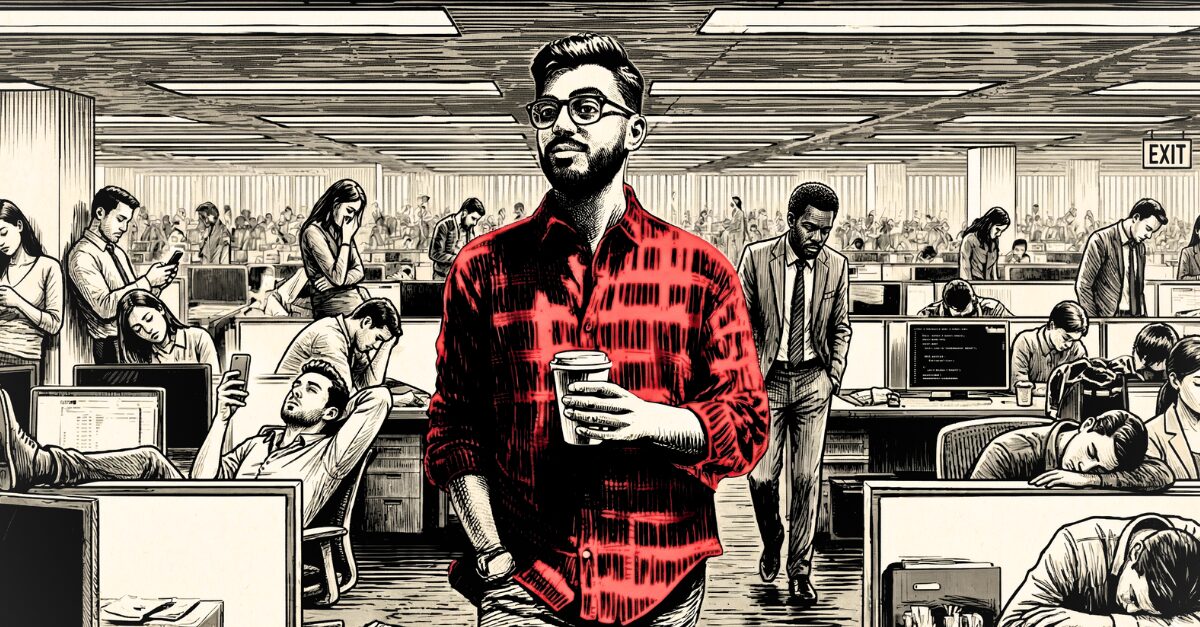
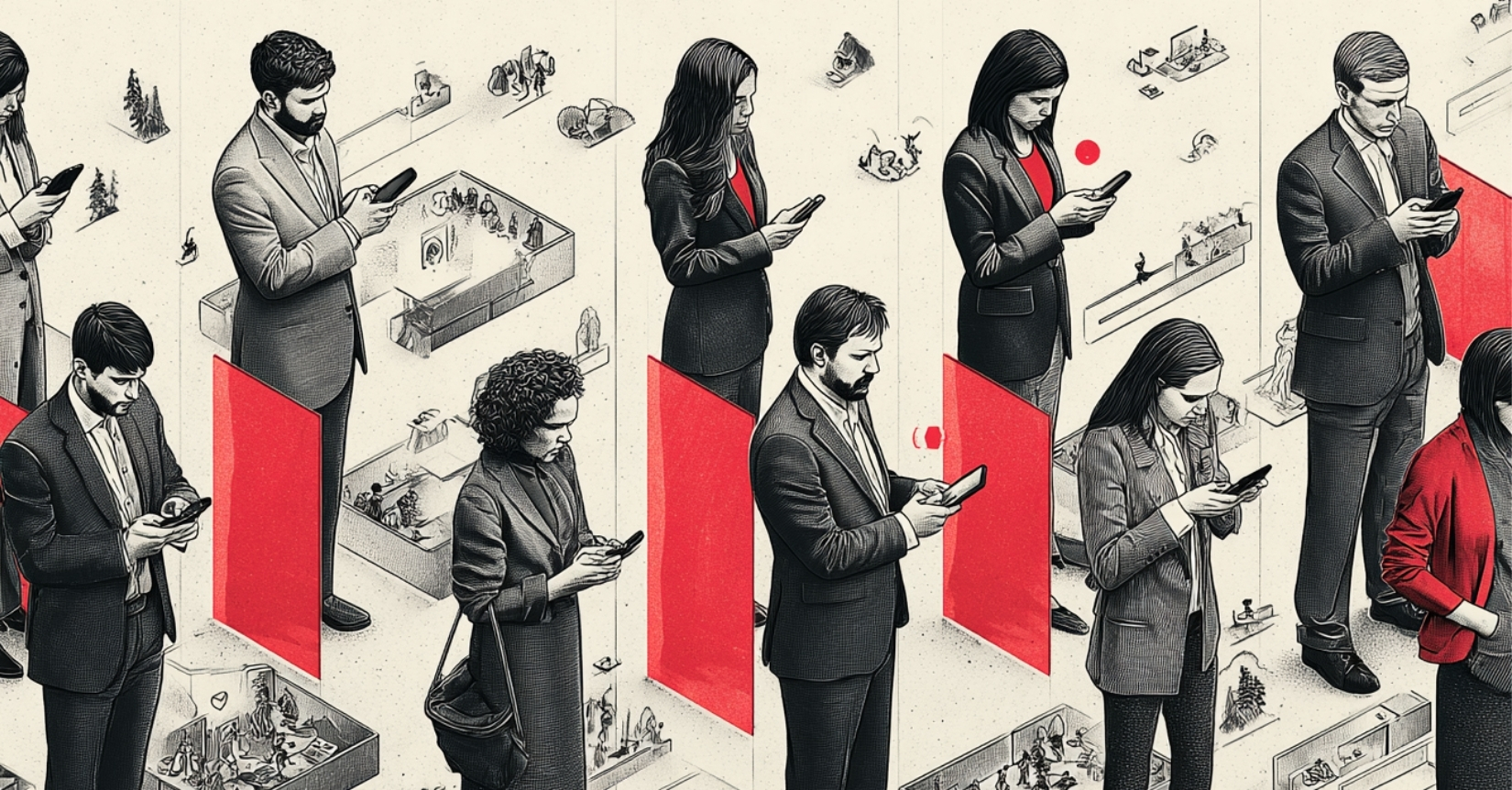
The result is a workplace split in two. Some employees are “Shadow AI” power users, experimenting with every new tool they can find to speed up their workflows. Others are hesitant, waiting for permission, or actively resisting the change.
Managers, meanwhile, are setting different expectations across departments. One team is encouraged to innovate, while another is told to stick to legacy processes to avoid risk.
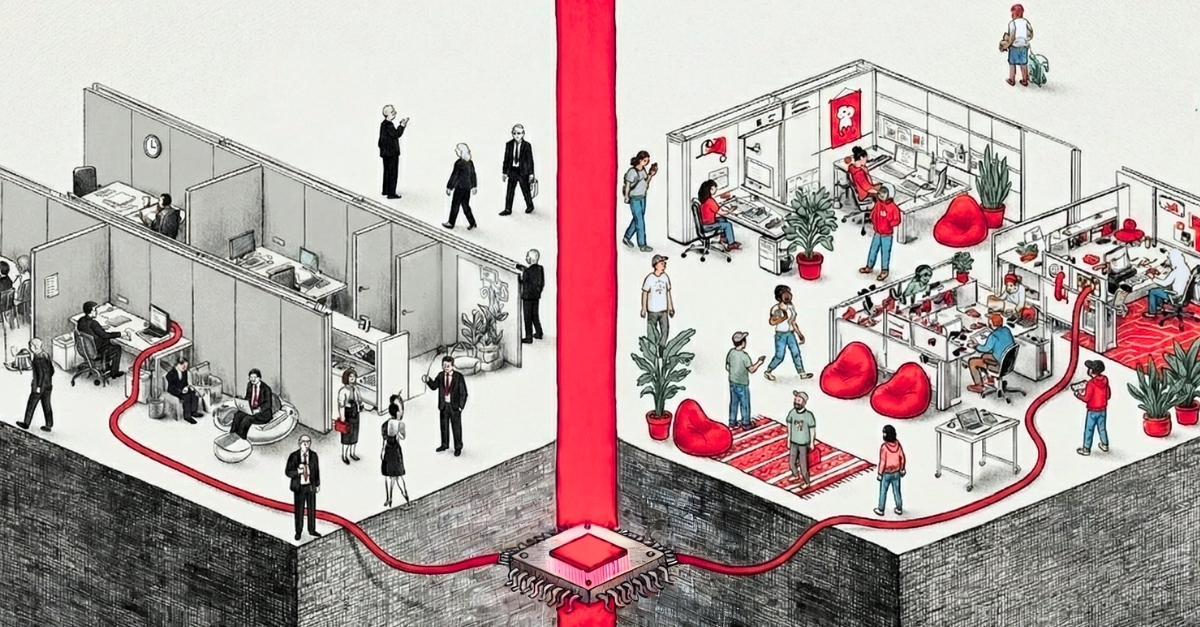
This is AI fragmentation: a state where inconsistent adoption creates invisible walls between teams, eroding trust and collaboration.
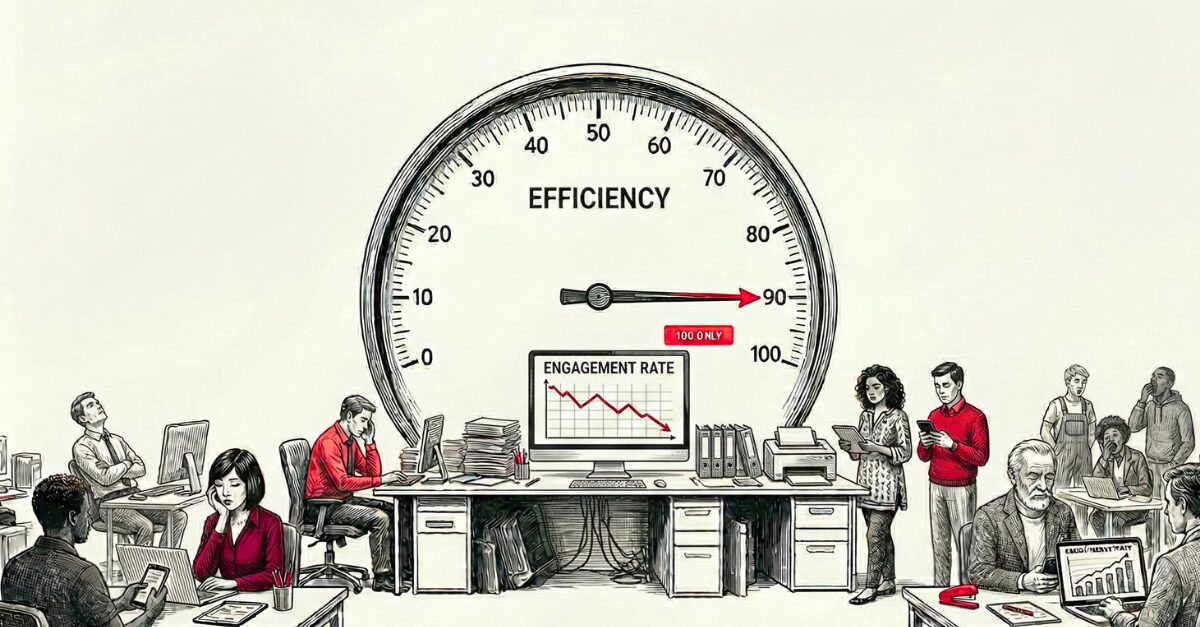
If left unchecked, this fragmentation doesn’t just hurt efficiency; it breaks your culture. Here is why that happens and how HR leaders can act as the “Connector” to fix it.

Why AI Adoption Fragments Workplace Culture
Technology transitions often expose existing cracks in an organization’s foundation. AI is unique because of the speed at which it is entering the workforce.
According to recent research from HBR, when leadership doesn’t set clear norms, employees create their own. This leads to two distinct cultural risks:
- The “In-Group” vs. “Out-Group” Dynamic: Employees skilled in AI may feel superior or frustrated by their slower colleagues, while those less comfortable with the tech feel left behind or threatened.
- The Erosion of Psychological Safety: When rules are unclear, employees hide their AI use (Shadow AI) for fear of being reprimanded, or they refuse to use it for fear of making a mistake.
As we discussed in our AI at Work Survey breakdown, the biggest barrier to adoption isn’t technical skill…it’s trust. If trust was already shaky before AI arrived, fragmented adoption will expose it immediately.
The Solution: HR as “The Connector”
To prevent this drift, HR must step into the role of The Connector.
In our ebook 5 HR Superpowers for the AI Era, we define the Connector as the ability to foster psychological safety and open communication during times of tech turbulence. The goal is to move away from “managing tools” and toward “aligning people.”
The solution starts with standardizing principles instead of just standardizing tools.
When you align teams on why and how we use AI, rather than just what software to buy, you create the consistency that restores psychological safety.
3 Steps to Realign Your Culture
How do you move from fragmentation to cohesion? Focus on these three areas:
1. Establish “Rules of the Road”
Don’t leave managers to guess. Create clear, company-wide guidelines on:
- When it is appropriate to use AI (e.g., brainstorming, drafting).
- When human judgment is non-negotiable (e.g., final decision making, sensitive feedback).
- What “good work” looks like in an AI-assisted world.
2. Democratize Training
Per our survey data, 68% of employees want training opportunities more than they want job guarantees. They don’t just want safety; they want utility.
When HR invests in development for everyone, not just the tech-savvy, it signals that no one is being left behind. This turns AI from a threat into a shared learning journey.
3. Encourage Open Experimentation
Poor communication that people used to work around becomes impossible to ignore in an AI world. Create safe spaces, like internal hackathons or “prompt sharing” channels, where failures are viewed as learning opportunities rather than compliance breaches.
Conclusion
Done right, AI doesn’t have to fragment your workplace. It can actually strengthen the connections between people- but only if HR treats adoption as a psychological safety challenge first and a technology challenge second.
The human element becomes more critical, not less, as technology advances.
Ready to turn AI adoption into a culture-building advantage?