

Think about the worst meeting you ever attended. Maybe one person monopolized the conversation and spoke ad nauseum about a topic that wasn’t important to everyone else. Perhaps the meeting started 10 minutes late because the previous group ran over their time slot. Or your facilitator struggled, in vain, to get the conferencing software to launch. Whatever the situation, one truth holds: the person in charge did not know how to run an effective meeting.
Key Takeaways
- Effective meetings start with a clear purpose, agenda, and the right participants.
- Sharing context and materials beforehand leads to better discussion and stronger decisions.
- Inclusive facilitation helps every behavioral style contribute meaningfully to the conversation.
- Clear action items and accountability ensure meetings lead to measurable progress.
What is an effective meeting?
An effective meeting creates clarity, alignment, and forward momentum. Rather than simply sharing updates, productive meetings help teams make decisions, solve problems, and clarify next steps. The best meetings have a clear purpose, encourage balanced participation across working styles, and end with accountability so employees leave knowing what happens next and who owns it.
The cost of bad meetings
People don’t usually think about it, but meetings are expensive. In addition to lost productivity costs, the business is paying the hourly rate of every employee in the room. Managers spend the most time in meetings—about 35-50% of their time, depending on level (see chart). Managers also happen to earn the largest salaries. It’s easy to see how fast costs can add up.
Let’s say you spend 60 hours per month in meetings and that you earn an annual salary of $75,000. It costs your employer roughly $2,160 per month—or $25,920 per year—for you to join those meetings. When meetings are efficient and productive, that’s money well-spent. When they’re not, that’s money down the drain.
For employees, it’s frustrating to sit in a conference room while someone talks about trivial topics, or grapples with the WiFi. They also view bad meetings as wasted time—time they could be using to chip away at their to-do list. For some employees, this is extremely stressful.
As a manager, you have the power to stop the madness. Here are five concrete actions you can take.
What Are the 5 P’s of Effective Meetings?
Effective meetings are often built around the 5 P’s:
- Purpose
- Preparation
- Participation
- Process
- Progress.
Strong meetings have a clear objective, give participants the context they need to contribute, encourage balanced discussion, follow a structured agenda, and end with clear next steps that move work forward.
How to run an effective meeting: a 5-step approach
As we’ve mentioned before, meetings have the potential to improve productivity. But in order for that to happen, they must be strategically designed. And that’s where step one comes in.
Step one: Define your meeting goals.
Are you gathering a group of stakeholders to arrive at a decision—one you must discuss or debate? Do you need to create an action plan based on data or an event? Will you be training your team on a new product or procedure? These are all solid goals.
Many times, especially with recurring meetings, people meet just to meet. But if there’s no clear goal to work toward, there’s no need for the meeting. Before booking a meeting room and sending invites, ensure that your meeting is necessary. It must be a good use of everyone’s time.
Step two: Draft and send your meeting agenda.
When you have first decided the goal of your meeting, you’re able to draft a clear agenda—one that focuses on the objective and is free of unnecessary filler.
According to Jeff Haden, author of The Motivation Myth: How High Achievers Really Set Themselves Up to Win, “No agenda should include the words information, recap, review, or discussion.” While this is an extreme viewpoint—discussions are a great use of meeting time if they’re focused on reaching the objective—his point is valid. When the goal is to hold an efficient meeting and to make the most effective use of your time, it’s important to strip away any tasks that people could do in advance.
Make better talent decisions across the entire employee lifecycle
Use science-backed insights to hire the right people, devleop stronger managers, and retain top performers- without relying on guesswork.
Along with your agenda, include any documentation you expect meeting participants to read prior to the meeting. Share the agenda via email one week in advance to give them plenty of time to review those materials.
Step three: Prepare participants for meaningful discussion
Effective meetings start before anyone joins the room. Sharing agendas, context, and relevant materials in advance helps participants come prepared to contribute rather than react in real time, leading to better discussions, stronger decisions, and clearer accountability. Preparation also supports more balanced participation across behavioral styles by giving employees time to process information and contribute thoughtfully. When people arrive prepared, meetings become more focused on solving problems, making decisions, and moving work forward.
Step four: Book the meeting according to the 25/55 rule.
People feel frustrated when they arrive at the conference room at the specified meeting time only to find that the room is still occupied. It’s also a pain for the folks dialing in from home.
By the time the group of people finally leave your room, you—or whoever is facilitating the meeting—has to scramble to get set up. If you want to start on time, implement the 25/55 rule. Every meeting should end at 25 past or 55 past the hour. This provides a five-minute buffer and gives you a much better chance of starting the meeting on time.
Google’s Speedy Meeting feature allows you to automatically end your meetings five minutes before the regular end time. Navigate to event settings and click the “speedy meetings” checkbox.
Note: This strategy only works when it’s implemented company-wide so get ready to champion better meeting habits and push for this change. It makes a huge difference.
Step five: Keep participants on task and engaged with time cops.
When you mix lots of different personalities in one room, the more extraverted individuals will do all the talking. Less extraverted employees won’t interrupt—even when they have something useful to contribute to the discussion. This is where meeting management comes in.
Meeting facilitation is about ensuring the group stays on agenda. It’s also making sure no single employee is dominating the conversation. There are strategies and tools to help you create safe spaces for your low-extraversion employees. For example, GoWall is a cloud-based meeting productivity solution that allows meeting participants to type notes in real time for all to see. A no-tech solution is to speak up when you notice one person is doing all the talking. Don’t be afraid to set limits.
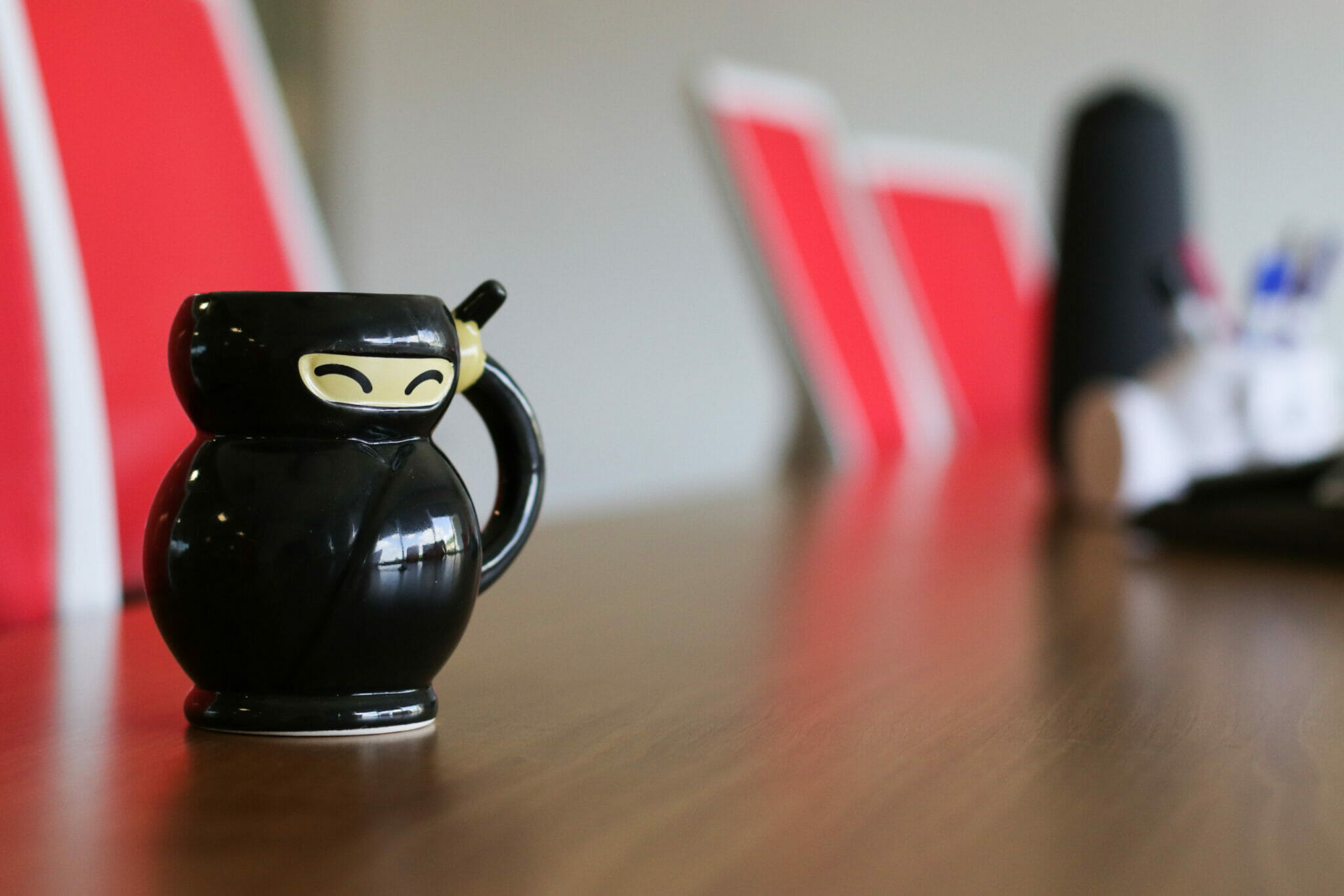
Time cops help meeting hosts stay on track and enforce rules. At the Predictive Index®, we leave a coffee mug in every meeting room. Usually, someone grabs the mug, but if nobody volunteers, the meeting host appoints a time cop at the start of the meeting. This way there are two people keeping the group on task—there’s strength in numbers.
Post meeting rules on meeting room walls so time cops are clear on what rules to enforce.
Step six: Send a post-meeting recap
As soon as you get back to your desk, send a brief recap of what the group accomplished to everyone who attended the meeting. If there are next steps, outline those along with deadlines and employees responsible for task completion. This eliminates confusion and is an essential step for successful meetings.
The future of meetings
In Deloitte’s recent 2018 Global Human Capital Trends report, researchers saw a trend away from face-to-face and phone meetings and toward work collaboration platforms. Of the people surveyed, 44% believe there will be less face-to-face meetings in the future—70% think workers will rely more on collaboration platforms like Trello, Basecamp and Slack.
Even as teams lean into technology more, actual meetings aren’t going away any time soon. Be sure to make the most of them.
Effective meetings do more than improve productivity. They strengthen communication, increase alignment, and help teams work together more effectively across the organization. Learn how stronger leadership and team dynamics can improve workplace performance through Predictive Index’s solutions.