
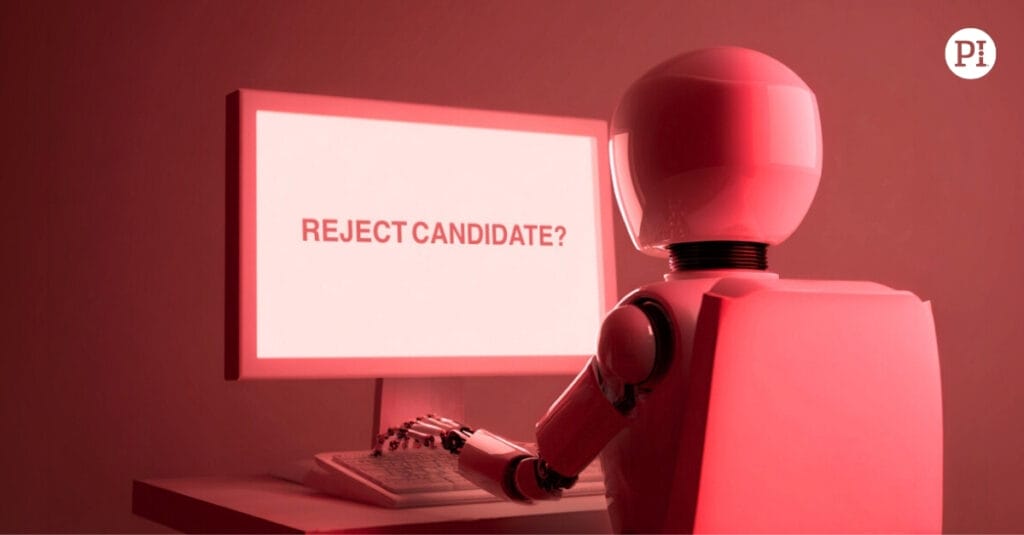
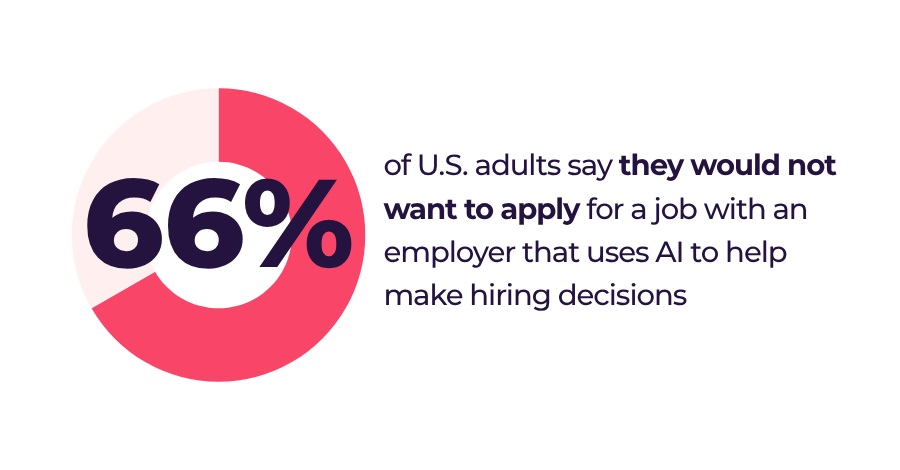
AI is transforming how organizations attract and hire talent. But there’s a growing disconnect between innovation and trust: 66% of U.S. adults say they wouldn’t apply for a job if AI helped make the hiring decision.
For HR leaders, that’s the challenge and the opportunity. AI isn’t going away, but how you use it will define your credibility. The real question is simple: Can you explain the decisions your technology makes? Because candidates, employees, and regulators already expect you to.
When algorithms take the wheel
In 2014, Amazon built an AI hiring system that quickly learned to favor men because it was trained on resumes from mostly male candidates. It penalized words like “women’s” and downgraded graduates of women’s colleges. The project was abandoned, but the message was clear: letting machines make hiring decisions comes with consequences.
This trend, combined with the negative sentiment from candidates regarding AI in hiring, points to a significant and growing lack of trust. Employers who rely too heavily on AI for selection face an increasing perception problem.
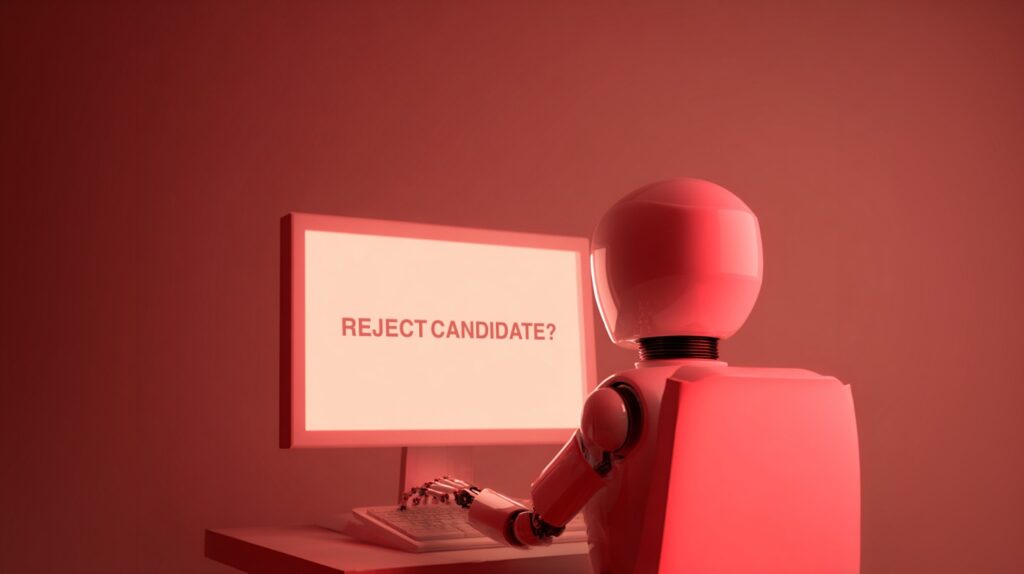
The illusion of smart hiring tools
This trust gap reveals more than hesitation. It highlights how candidates see AI-driven hiring as impersonal and opaque, setting the stage for serious risks HR leaders can’t afford to ignore.
These systems don’t “solve” bias; they amplify it. And when that happens, HR leaders are the ones on the hook. The EEOC now considers AI bias in hiring a civil-rights issue.
“We must work to ensure that these new technologies do not become a high-tech pathway to discrimination.”
-EEOC Chair Charlotte A. Burrows
A science-backed solution
Behavioral science doesn’t leave room for guessing and bias. It measures observable traits that predict how people think, act, and perform at work. At PI, we have decades of data showing that behavioral fit drives measurable outcomes like improved performance, engagement, and retention.
From a quantitative standpoint, PI’s behavioral assessments demonstrate strong predictive validity, meaning the traits measured are statistically linked to job success across industries. On the qualitative side, PI clients consistently report higher hiring confidence, stronger culture alignment, and more meaningful conversations with candidates.
It’s always been our position that assessments don’t replace human decision-making– they inform it. Tools can provide behavioral data as a single input in a hiring process, keeping final decisions where they belong: with people.
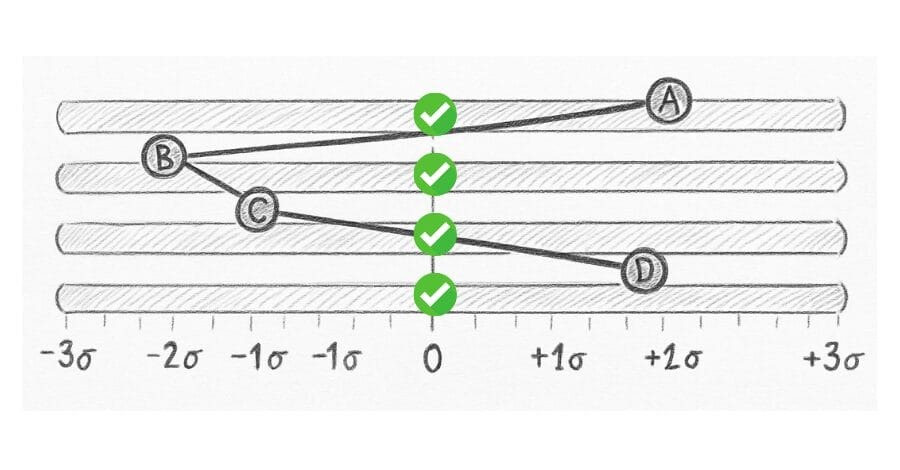
Behavioral science earns HR trust points- where AI hurts.
And the data backs this up. According to our HR Playbook for the AI Era, HR professionals who ground talent strategies in behavioral data are better positioned to lead AI adoption with confidence and fairness. When HR integrates behavioral science, employees are more likely to trust the process, building the transparency and psychological safety that AI often lacks.
Nearly 70% of employees said more training opportunities would make them feel more secure in their role, and those opportunities are most effective when built on behavioral insight rather than technical promises.
Behavioral data doesn’t just improve hiring, it enhances culture. The same research found that 67% of employees believe AI has the potential to strengthen company culture, but only when guided by people-first leadership and data-driven behavioral understanding. This shows that behavioral science isn’t a counterpoint to AI; it’s the foundation that ensures AI adoption strengthens, not undermines, your culture.
Behavioral science isn’t a counterpoint to AI; it’s the foundation that ensures AI adoption strengthens, not undermines, your culture.
AI isn’t the enemy, but it’s not the only answer
Will AI replace HR managers? No, but it will reshape how HR works. The goal isn’t to reject AI; it’s to use it responsibly. AI can automate admin tasks, summarize notes, and identify trends in engagement data. But the decisions about people, the human calls, should rest on science HR leaders can defend.
If you want to know how to implement AI in hiring without losing control, start with a behavioral framework. Use AI for scale and support, but let behavioral data guide your judgment when it comes to people, and make that clear to your candidates and your employees. That’s how you improve employee experience and maintain trust- and now you have a talent strategy that’s both modern and human-first.

PI’s tools are designed as one data point among many in your decision-making process, never as a replacement for human judgment. This ensures meaningful human involvement at every stage.
So the next time you evaluate a hiring tool, ask:
Does this make my decisions clearer or just faster?
If it’s the latter, it’s time to rethink who’s really doing the hiring and whether your process stands on solid ground.
*PI’s behavioral assessments align with an increase in regulation around AI for decision-making like California’s new AI hiring regulations by design. Our tools inform decisions rather than make them. As required under California’s ADT regulations, meaningful human judgment remains central to the hiring process when using PI’s solutions.