

No matter how you slice it, being the new person at any organization requires you to take a big step into unfamiliar territory. Two months ago, I joined The Predictive Index (PI) as the client marketing manager after working in account management at the same advertising agency for three years. And when I arrived on my first day, it quickly hit me that I wasn’t, proverbially speaking, “in Kansas anymore.”

While feeling a bit unsettled initially comes with the territory, I also felt more at ease on my first day at PI than I’d felt on any other first day. At PI, the product is not only designed to place the right people in the right jobs but also has features that were created to ensure employees feel inspired, engaged and receive the coaching they need to progress in their careers. The product and the company’s mission—to build better work and a better world—are inextricably linked together, and boy do we drink our own champagne! As a new hire, I experienced first-hand just how ingrained PI’s product is into its culture through my team, which manifested that mission with enthusiasm.
My team’s passionate exemplification of the PI mission was a game-changer for me because it allowed me to be confident that the organization I joined was certain I was the right person for the job, invested in and committed to my success. So how do you go about building that kind of confidence? Below are 5 suggestions that you and your team can leverage to get a new team member up and running in no time.
- Be a beacon of your culture. Every organization has a culture. Encourage new team members to internalize key elements of your organization’s core values to help them understand it better. During my first few weeks, my team made sure to clearly explain how they did things and made it a priority to walk me through our core values at both the organizational and team levels. As a team, our core values incorporate the Triangle of Trust framework that Patrick Lencioni lays out in his book The 5 Dysfunctions of a Team.
 According to the framework, out of trust comes constructive conflict; out of constructive conflict comes commitment; out of commitment comes accountability; out of accountability comes results. Knowing this framework helped me to understand what PI as an organization, as well as my team, values. Regardless of what your organization’s values are, building employee confidence by clearly articulating those values is key. Check out our best practices for building workplace confidence here and be sure to share not only what your new hire’s role entails but also expectations around how they should work with others.
 - Create a bespoke onboarding program. Because people are wired and learn differently, onboarding is not one size fits all and getting a new employee ramped up efficiently is essential. Some people prefer to take ownership over their onboarding process and set up their own meetings, while others appreciate when their onboarding program is more structured. My team used the interview process and our product to really understand what my behavioral drives and needs were and tailored my onboarding program to meet those needs. As you’re building out a new employee’s onboarding program, spend time getting to know who they are and how they learn before they start and work to align their onboarding program accordingly.
- Set clear expectations. Tell your new hire what you expect from them and when you expect it to be complete. My manager set up a Trello board for me with the steps he wanted me to complete in my onboarding process and the timeline for completing each step. With so much to learn during onboarding, help your new hire prioritize where they should spend their time and start contributing.
- Check in often. To ensure I started off on the right foot, my manager set up weekly 1:1s with me to discuss progress, blockers, and goals. Having this designated time every week to celebrate milestones and work through stressors helped me to feel comfortable and confident that I was moving in the right direction. Having that coaching and guidance early on helped me to move through the onboarding period quickly so I could gain the knowledge I needed to start contributing to the team. Once your new hire starts, make sure to establish a consistent cadence for touching base with them so you can understand how they feel things are going.
- Be transparent. Not only should you ask your new hire how they think it’s going, but you should be open about areas of opportunity. My manager used our 1:1s to go over any feedback he had for me. Creating that transparent dialogue helps to build trust and shows your new hire that you are committed to their success. Even though they’re new, help them to develop good habits early on by course correcting when necessary.
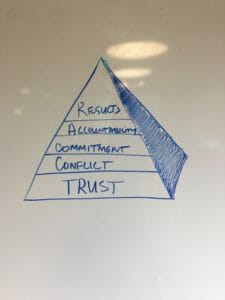 According to the framework, out of trust comes constructive conflict; out of constructive conflict comes commitment; out of commitment comes accountability; out of accountability comes results. Knowing this framework helped me to understand what PI as an organization, as well as my team, values. Regardless of what your organization’s values are, building employee confidence by clearly articulating those values is key.
Being new is hard and welcoming a new employee to the team isn’t a one-person job, it’s truly a team effort. That said, when done correctly, the confidence you’ll inspire in your new hire will form the basis of a strong and productive team relationship.